SES gives you a relay. ITPison gives you infrastructure.
ITPison vs. Amazon SES
Choose ITPison because…



Last verified: [Month Year] — ITPison reviews comparison data quarterly.
Amazon SES
Is built around API and SMTP access, which works well for teams already developing within AWS. Applications send directly through the relay, and the integration is developer-led. This model typically works cleanly in greenfield environments.
ITPison
Supports API and SMTP as well — but adds Drop-Folder Integration, a file-based sending method not offered by any major ESP. ITPison supports API and SMTP as well — but adds Drop-Folder Integration, an exclusive method not offered by any major ESP. Drop-Folder requires no API development, no SDK, and no custom integration code. Your system writes the recipient list, email content, and send configuration into a shared directory. ITPison's infrastructure connects through a fixed IP, retrieves the files, and handles the rest. Every computer system can write files to a folder — which means no engineering project, no approval chain, and no delays.
Supports API and SMTP as well — but adds Drop-Folder Integration, a file-based sending method not offered by any major ESP. ITPison supports API and SMTP as well — but adds Drop-Folder Integration, an exclusive method not offered by any major ESP. Drop-Folder requires no API development, no SDK, and no custom integration code. Your system writes the recipient list, email content, and send configuration into a shared directory. ITPison's infrastructure connects through a fixed IP, retrieves the files, and handles the rest. Every computer system can write files to a folder — which means no engineering project, no approval chain, and no delays.
Amazon SES:
Application →
SES SMTP/API →
Inbox →
ITPison:
Any internal system →
Writes files to shared directory →
ITPison sends →
Inbox →
Bottom line: SES requires engineers to build and maintain API integrations. ITPison's Drop-Folder removes that requirement entirely — if your system can output a file, you can send email, typically without a single line of integration code.
SES routes traffic through shared sending infrastructure by default. Dedicated IP options are available but require additional configuration and cost. In shared environments, sender reputation can be influenced by other senders on the same IP range — a common concern for high-volume enterprise senders.
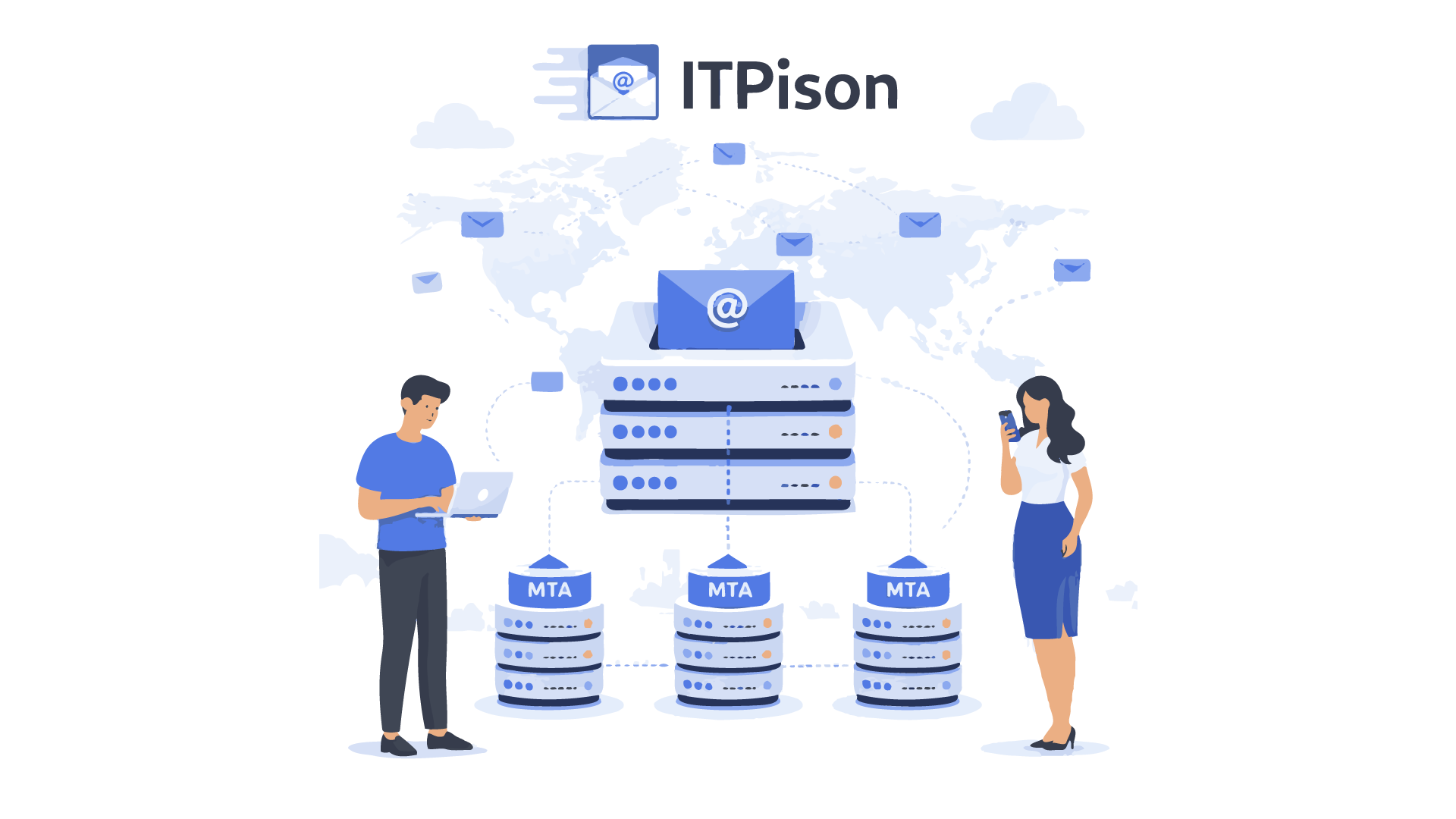
ITPison’s architecture is built around IP isolation as a default. Sending environments are provisioned per client, and the March™ MTA — a relay-only engine running on fully owned source code — handles message routing with no dependency on third-party MTA software. This architecture is designed for organizations where deliverability is operationally critical, not a background concern.
SES provides raw relay infrastructure with no native multi-tenant model. Agencies and platform operators who need white-label sending environments — isolated tenant IPs, per-client reputation separation, branded delivery — must engineer this entirely themselves. ITPison's multi-tenant architecture delivers this ready-made.
March™ MTA
Proprietary relay-only engine. Fully owned source code. No third-party MTA dependency.
IP Isolation
Dedicated sending environments designed to prevent cross-client reputation bleed.
No Cloud Lock-In
Infrastructure operates independently of any cloud provider’s ecosystem.
White-label & multi-tenant ready
White-label tenant isolation and per-client reputation separation — delivered ready-made, not engineered from scratch.
Knowing What Happens After Send
SES provides delivery event data — bounces, complaints, opens — through SNS notifications and CloudWatch. For teams inside AWS, this integrates cleanly. For teams outside AWS, building a coherent observability layer often means assembling multiple services.
ITPison’s delivery observability is built into the platform. Sending logs, delivery status, and performance tracking are accessible without requiring additional cloud services or custom integrations. For enterprise environments where IT and ops teams — not just developers — need delivery visibility, this distinction matters.
Amazon SES
Amazon SES may be the right choice if:
• Your team is already operating inside AWS
• You’re optimizing for per-email cost at high volume
• Your application is developer-led and API-native
• You have existing CloudWatch and SNS infrastructure
Amazon SES may not be the right fit if:
• You need to integrate without an engineering project or API development cycle
• You require IP isolation without additional configuration
• Your operations team — not just developers — needs delivery visibility
• You’re building a multi-tenant or white-label email infrastructure
ITPison
ITPison may be the right choice if:
• You want to integrate without engineering resources, API development, or internal approval cycles
• Deliverability and IP reputation are operationally critical
• You need a white-label or multi-tenant sending platform
• Your infrastructure must operate outside any cloud provider’s ecosystem
• You need white-label or multi-tenant email infrastructure — ITPison delivers tenant isolation and per-client reputation separation ready-made; SES requires you to engineer it yourself
ITPison may not be the right fit if:
• You’re a small team with a simple, AWS-native transactional email use case
• Self-serve, immediate provisioning is a hard requirement
• You’re optimizing for the lowest possible per-email cost above all other factors
1

Consultation & Assessment
ITPison provisioning begins with a scoped consultation. Your current sending configuration, volume, and integration requirements are reviewed before any infrastructure is set up.
>2

Infrastructure Provisioning
Dedicated sending infrastructure, IP pools, and your chosen integration method — Drop-Folder, API, or SMTP — are configured to your specifications before go-live.
>3

Parallel Testing & Cutover
Testing typically occurs in parallel with existing SES traffic. Cutover is coordinated after delivery performance is confirmed.
Ready to Evaluate ITPison?
If your sending infrastructure needs more than a relay, let’s talk about what dedicated infrastructure looks like for your environment.
(Account setup begins with a short consultation.)